September brings more than a new school year. It brings the return of Friday night football, packed stands, marching bands, game film, and the weekly test of whether a facility is ready for a full crowd and a demanding schedule.
For athletic directors, coaches, and facility managers, creating that experience starts long before kickoff. A complete football stadium must support the game from end zone to end zone: regulation football goalposts, organized team areas, weather protection, safe spectator seating, reliable field accessories, and durable infrastructure that can perform throughout the fall season.
This guide outlines the key equipment decisions for building a professional, efficient, and game-ready football environment.
Start with the Iconic Centerpiece: Football Goalposts
Football goalposts are the most recognizable feature on the field and one of the most important infrastructure investments a school can make. The right system must match the level of competition, field layout, installation plan, and long-term facility budget.
When comparing football goal posts and field goal systems, begin with the governing specifications.
NFHS vs. NCAA Goalpost Dimensions
The primary difference between high school and college football goalposts is the width between the uprights:
- NFHS high school width: 23 feet, 4 inches
- NCAA college width: 18 feet, 6 inches
- Crossbar height: 10 feet above the playing surface for both levels
- NCAA upright extension: Common NCAA configurations extend 20 feet above the crossbar, creating an approximately 30-foot overall height
Schools hosting multiple levels of competition should confirm the current NFHS or NCAA rulebook, conference requirements, and local facility specifications before ordering. A goalpost that can be adjusted to the appropriate width offers significantly more flexibility than a fixed-width system.
Permanent, Semi-Permanent, or Portable?
The installation style should reflect how the field is used throughout the year.
Permanent goalposts are appropriate for dedicated football stadiums with a fixed field layout and limited need for seasonal removal. They provide a clean, consistent presentation and are suited to facilities with established foundations and professional maintenance support.
Semi-permanent goalposts offer stability while allowing the main structure to be removed or stored when the field is used for other sports or events. This configuration works well for schools and municipal complexes that need to balance football with soccer, lacrosse, field hockey, or other field activities.
Portable goalposts are useful for practice fields, tournaments, temporary venues, and facilities that regularly change layouts. Mobility can simplify storage and field conversion, but portable systems still require appropriate ballast, handling procedures, and safety inspections.
Aluminum or Steel?
Material selection affects weight, corrosion resistance, installation, and maintenance.
Aluminum goalposts provide a strong, lightweight, weather-resistant solution. They resist rust and corrosion, making them well suited for outdoor fields exposed to rain, snow, irrigation, and field chemicals. Their reduced weight can also simplify seasonal handling and installation.
Steel goalposts offer substantial structural mass and can be a practical choice for facilities prioritizing a traditional heavy-duty construction profile. However, steel requires careful attention to protective finishes, fasteners, surface damage, and corrosion prevention over time.
Neither material should be evaluated in isolation. Consider wind exposure, foundation design, expected use, equipment handling, and available maintenance resources.
Why an Expandable System Can Save Schools Money
A school that hosts youth, junior varsity, varsity, and college-level events may otherwise need separate goalpost systems or costly field modifications. An adjustable system addresses that challenge with one engineered structure.
The Expandable Football Goal Posts with 6-5/8-inch poles and 20-foot uprights features a telescoping crossbar that adjusts between the 23-foot, 4-inch NFHS width and the 18-foot, 6-inch NCAA width. This allows a shared athletic complex to support multiple levels of play without purchasing separate goalposts.
For schools managing limited capital budgets, the savings extend beyond the initial purchase. One adaptable system can reduce storage requirements, simplify field planning, and limit future replacement costs.
Hinged and Kick-Down Options for Multi-Sport Fields
Football season is only one part of the athletic calendar. When a stadium also hosts soccer, lacrosse, field hockey, baseball events, or community programs, overhead structures can create logistical challenges.
A compatible Football Hinge Kit can support a kick-down or hinged configuration when specified for the goalpost system. These designs can make seasonal removal or lowering more efficient and help protect the goalpost during non-football use.
Always verify compatibility, clearance, access covers, and operating procedures with the manufacturer before installation.
Install Goalposts with Proper Ground Sleeves
Ground sleeves are not an accessory to overlook. They are a foundational part of a stable, serviceable goalpost system.
A proper installation should include:
- Manufacturer-matched sleeves sized for the post and system
- Reinforced concrete footings designed for local soil and weather conditions
- Precise alignment so the crossbar is level and the uprights are plumb
- Adequate drainage to reduce water accumulation and corrosion
- Flush, load-bearing covers when goalposts are removed
- Professional evaluation of anchors, access frames, and surrounding surfaces
Review the Standard Ground Sleeve requirements before pouring concrete. Installation should be handled by qualified professionals familiar with structural foundations and athletic-field equipment.
For a fixed-width high school stadium, the Semi-Permanent High School Football Goal Posts provide a regulation-focused option with a 23-foot, 4-inch crossbar, 6-foot offset, and heavy-duty aluminum construction.
Build an Organized, Weather-Ready Sideline
A well-run sideline protects players, improves communication, and keeps unnecessary equipment out of traffic areas. The goal is to create clearly defined spaces for players, coaches, athletic trainers, officials, and equipment staff.
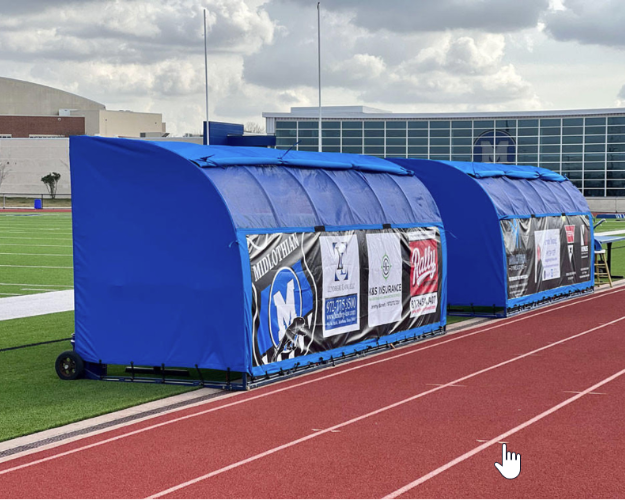
Team Shelters Protect Players and Improve Presentation
Team shelters help keep athletes shaded, organized, and off the field surface during stoppages and substitutions. A covered shelter can shield players from sun, rain, wind, and wet turf while giving each team a defined sideline location.
For football programs, choose a shelter based on:
- Seating capacity
- Available sideline depth
- Portability and storage requirements
- Weather exposure
- Branding and team-color needs
- Access for coaches, trainers, and equipment personnel
Custom covers can also reinforce school identity and create a more professional appearance for athletes, visiting teams, families, and recruits.
Add Durable Aluminum Player Benches
Pair shelters with aluminum player benches to create a stable seating system. Aluminum is lightweight, corrosion-resistant, and easier to maintain than wood or unprotected steel.
Options with backrests provide added support during extended games. Backless benches can be more flexible on multi-use sidelines and may allow access from either side. Models with gear shelves help keep helmets, medical supplies, water, and sideline equipment organized instead of scattered along the team area.
Improve the Fan and Media Experience
The stands and press area shape how spectators experience the game. Comfortable seating and a reliable media platform also support fundraising, school visibility, recruiting, and community engagement.
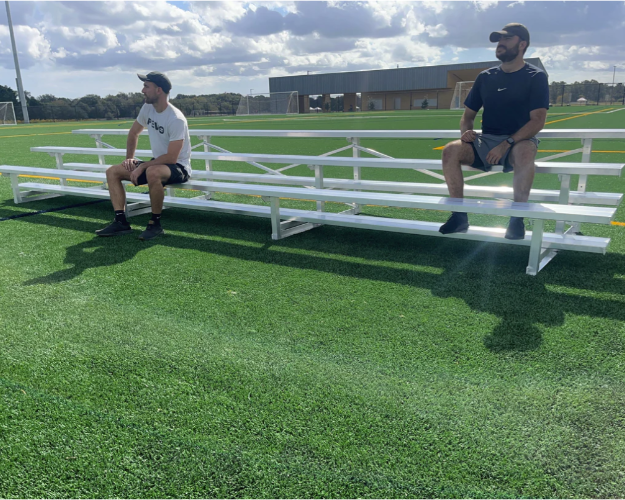
Stadium Bleachers That Adapt to the Schedule
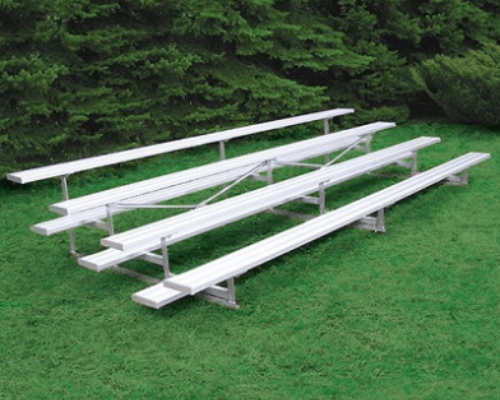
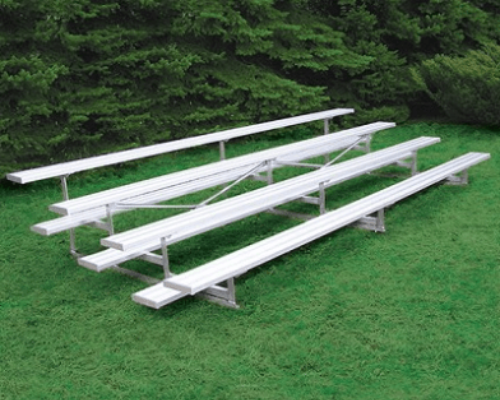
Portable aluminum bleachers provide flexible seating for football games, youth events, soccer matches, baseball tournaments, and community programs.
When planning stadium bleachers, evaluate:
- Seating capacity and available footprint
- Three-row versus four-row configurations
- Tip-and-roll mobility
- Back-to-back seating needs
- Surface conditions and access routes
- Guardrails, end caps, and applicable safety requirements
Aluminum construction resists rust and simplifies cleaning, while portable designs allow schools to add overflow seating for rivalry games, playoffs, homecoming, and championship events.
Give Announcers and Videographers a Better View
A press box or filming tower provides more than a place to sit. It creates a consistent vantage point for coaches, statisticians, announcers, photographers, and game-film crews.
The Portable Sports Press Box and Filming Tower offers elevated field visibility, weather protection, mobile placement, and optional school-color finishes. Depending on the configuration, facilities can add towing equipment, storage, enclosures, banners, and announcing or power packages.
For football programs, the elevated angle improves game-film quality and helps coaches review formations, spacing, coverage, and player development with greater clarity.
Rely on the Details Officials and Coaches Use
Game-day accessories may be smaller than goalposts and bleachers, but they directly affect communication and field operations.
The American football equipment collection includes practical equipment for officials, chain crews, coaches, and field staff, including:
- Down markers and flip-down indicators
- Chain packages for first-down measurement
- Foldable or self-standing sideline markers
- End zone pylons
- Wind streamers for field-goal visibility
- Ground sleeves, access covers, and turf plugs
Use high-visibility markers that are easy to see under stadium lighting and durable enough for repeated setup, transport, and storage. Store chain sets and markers in a designated equipment location so the sideline remains clear before and during play.
Protect Players Near the Goalposts
Goalpost padding is an essential part of a responsible stadium setup. Even with a properly positioned offset, athletes can approach the end line at speed during plays, returns, and celebrations.
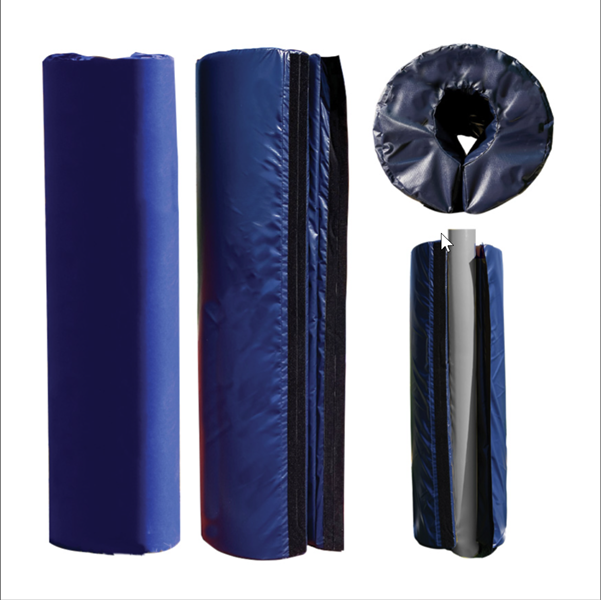
Football goalpost protector pads add a high-density impact-absorbing layer around exposed posts. Weather-resistant vinyl covers can also be customized with school colors, logos, mascots, or sponsor graphics.
Select padding that matches the post diameter and inspect it for:
- Torn vinyl
- Compressed or exposed foam
- Loose attachment points
- Water intrusion
- Gaps between the pad and post
Padding should never be treated as a substitute for proper field clearance, installation, or supervision. It is one part of a complete safety program.
Create a Preseason and Winter Maintenance Plan
Before the first home game, inspect the goalposts, sleeves, anchors, hardware, protective pads, wind streamers, pylons, markers, benches, shelters, bleachers, and press equipment. Repeat inspections after severe weather, heavy use, or equipment relocation.
A practical maintenance checklist includes:
- Confirm that goalposts are level, plumb, and securely seated.
- Check sleeves, anchors, bolts, access covers, and turf plugs.
- Inspect pads for damage, movement, and proper fit.
- Remove damaged field markers and replace faded or broken components.
- Confirm that benches and shelters are stable and properly positioned.
- Check bleacher footing, guardrails, end caps, and walking surfaces.
- Secure cables, cameras, and media equipment outside active traffic areas.
- Clean and dry equipment before storage.
- Remove or lower equipment according to manufacturer instructions during the off-season.
- Store portable accessories in a dry, organized location protected from unnecessary weather exposure.
Winter care is especially important in areas with freezing temperatures, snow, and freeze-thaw cycles. Keep drainage paths clear, inspect concrete and sleeve areas for movement, and avoid leaving removable equipment exposed when it can be stored safely.
Make This Fall’s Game-Day Experience Complete
A memorable Friday night begins with a facility that works. Regulation football goalposts establish the field. Team shelters and aluminum benches organize the sidelines. Stadium bleachers welcome the community. Press boxes and filming towers improve coverage. Markers, chains, pylons, and wind streamers help officials and coaches manage the details.
For schools investing in sports equipment for schools, the best approach is to plan the stadium as a complete operating environment rather than a collection of individual purchases.
Review your field, schedule, storage capacity, competition levels, and safety procedures now. Then contact Goals4Sports for product guidance and facility support before the next kickoff.