Soccer Balls – Training, Match, Futsal & Custom Balls

Shop quality soccer balls at Goals4Sports® for youth leagues, schools, clubs, and competitive teams. Explore training balls, match balls, futsal balls, specialty soccer training balls, and custom soccer balls featuring your team or organization logo. Choose from trusted Soccer Innovations products designed for dependable performance, durability, and consistent play.
-
Mini Momentum Soccer Balls for Skill Training & Practice
Regular price
$19.00Sale price $17.00 -
STRIKER 290 Gram Heading Trainer Soccer Ball – Sizes 4 & 5
Regular price
$31.00Sale price From $26.00 -
Bullet Soccer Ball | Bullet Ball™
Regular price
$31.00Sale price From $28.00 -
SALA Futsal Soccer Ball Size 4 | Soccer Innovations
Regular price
$47.00Sale price $42.00 -
Speed Ball with DualTech Technology – NFHS Match Soccer Ball
Regular price
$47.00Sale price $44.00 -
Street Soccer Ball – DualTech™ Waterproof Match Ball
Regular price
$51.00Sale price From $48.00 -
Soccer Training Ball with Cord – Jimmy Ball 2.0 Hands-Free Trainer
Regular price
$53.00Sale price $49.00 -
Spark Soccer Ball – 2026 USA World Cup Size 5
Regular price
$55.00Sale price $50.00 -
Speed Demon Soccer Ball – FusionTech Thermo Match Ball
Regular price
$66.00Sale price $63.00 -
Goalkeeper Angle Soccer Ball – Improve Positioning & Saves
Regular price
$86.00Sale price $75.00 -
Green Tazmania Soccer Ball – Seamless FIFA Quality Pro Match Ball
Regular price
$86.00Sale price From $80.00 -
Red Tazmania Soccer Ball – FIFA Quality Pro Thermo Match Ball
Regular price
$86.00Sale price From $81.00 -
Blue Tazmania™ Thermo Bonded Soccer Ball – FIFA Pro
Regular price
$86.00Sale price From $81.00 -
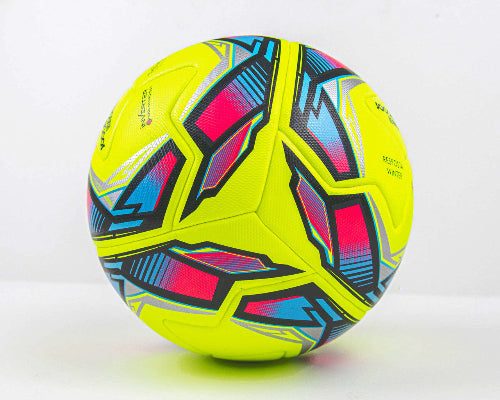
Inverter™ Thermo Match Soccer Ball – Fluorescent Winter Pro Ball
Regular price
$91.00Sale price $85.00 -
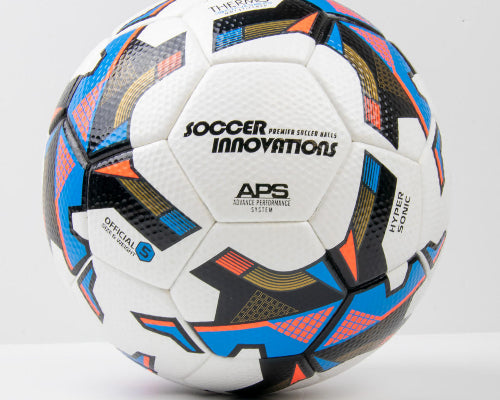
Hypersonic Soccer Ball – FIFA Quality Pro Match Ball
Regular price
$120.00Sale price $110.00



Filters
Soccer Ball Size & Age Comparison Chart
| Ball Size | Recommended Age | Circumference | Common Use |
|---|---|---|---|
| Size 1 | All ages | 18–20 in. | Skills and mini-ball training |
| Size 3 | 8 and under | 23–24 in. | Youth soccer |
| Size 4 | 9–12 years | 25–26 in. | Youth soccer |
| Size 5 | 13 and older | 27–28 in. | Older youth and adults |
Note: Age recommendations are general guidelines. League requirements may vary. Futsal balls have different bounce characteristics from standard outdoor soccer balls.
Soccer Balls – Frequently Asked Questions
1. What size soccer ball should I buy for my child?
The correct soccer ball size depends on the player's age and league requirements. Size 3 is commonly used for players ages 8 and younger, Size 4 for ages 9–12, and Size 5 for ages 13 and older. Younger players may also use Size 1 mini soccer balls for individual skill development. Always check your league's requirements before purchasing.
2. What is the difference between a training soccer ball and a match soccer ball?
Training soccer balls are designed for frequent use during practices, drills, and recreational play. Match soccer balls generally feature higher-performance materials and construction methods intended to deliver more consistent flight, touch, and responsiveness during competitive games.
3. What types of soccer balls does Goals4Sports® offer?
Goals4Sports® offers youth soccer balls, training soccer balls, match balls, futsal balls, specialty skill-development balls, goalkeeper training balls, and custom soccer balls. Our collection includes products from Soccer Innovations for individual players, clubs, schools, and competitive programs.
4. What is a thermo-bonded soccer ball?
A thermo-bonded soccer ball uses heat and pressure to join its outer panels rather than relying entirely on traditional stitching. This construction can help reduce water absorption and provide a more consistent playing surface. Actual performance depends on the ball's materials and design.
5. What is the difference between a futsal ball and a regular soccer ball?
Futsal balls are designed with reduced bounce for improved control during fast-paced games on indoor courts and other suitable hard surfaces. A standard outdoor soccer ball generally has a higher bounce and is designed for play on grass or artificial turf. Futsal balls also follow different size and performance specifications.
Explore our Futsal Goals Collection for equipment to complete your futsal setup.
6. Are Goals4Sports® soccer balls suitable for school and club soccer programs?
Yes. Goals4Sports® offers soccer balls suitable for youth leagues, school athletic programs, recreational teams, and competitive clubs. Coaches and athletic directors can select training or match balls based on their players' ages, playing surfaces, and competition requirements.
7. Can I order custom soccer balls with my team or school logo?
Yes. Goals4Sports® offers custom soccer balls featuring team logos, school names, club branding, sponsor artwork, and company logos. Custom soccer balls are popular for tournaments, promotional events, fundraising programs, and team gifts. Explore our Custom Soccer Balls with Your Logo to learn about customization options, artwork requirements, minimum logo quantities, and production times.
8. How much air pressure should I put in a soccer ball?
Always follow the recommended inflation pressure printed on the soccer ball or provided by its manufacturer. Different ball designs may require different pressures. Use a ball pressure gauge and an appropriate inflation needle to avoid overinflating or damaging the bladder.
9. How should soccer balls be cleaned and stored?
Wipe soccer balls with a damp cloth after use to remove dirt, grass, and debris. Allow them to dry before storing them in a cool, dry location away from excessive heat and direct sunlight. Avoid abrasive cleaners and prolonged exposure to moisture. Ball carrying bags can help coaches organize and transport equipment.
10. Can soccer balls be used on both natural grass and artificial turf?
Many soccer balls are suitable for use on natural grass and artificial turf. However, surface compatibility depends on the ball's construction and manufacturer recommendations. Rough or abrasive surfaces may cause faster wear, so selecting a ball designed for the intended playing environment is important.
11. Does Goals4Sports® offer soccer ball bags for coaches and teams?
Yes. Goals4Sports® offers soccer ball carrying bags, backpack bags, and equipment storage solutions for coaches, schools, clubs, and youth leagues. Our collection includes bags with capacities ranging from 5 to 18 soccer balls. Explore our Soccer Ball Bags & Storage Collection to find the right carrying bag for your team.
Browse our Soccer Balls Collection to find available ball carrying bags and storage options.
12. Can schools, soccer clubs, and leagues purchase soccer balls in larger quantities?
Yes. Goals4Sports® serves schools, colleges, youth soccer organizations, clubs, and athletic departments purchasing equipment for their programs. Customers planning larger orders can contact Goals4Sports® to discuss product availability, quantities, and ordering requirements. School purchase orders are accepted.

Goals4Sports In business since 2006.
Goals4Sports In business since 2006. We Provide the best quality sports products and services to you at the lowest prices. No wonder you keep coming back 4 more. Family-Owned we take great pride in our company and our commitment to customer service, and our products. We designed our online store to provide a safe and secure environment to browse our product catalog.