Soccer Goal Size Chart & Buying Guide
Choosing the correct soccer goal size helps create a safer, more enjoyable playing experience. It also ensures the goal fits the players’ age group, game format, field dimensions and training needs.
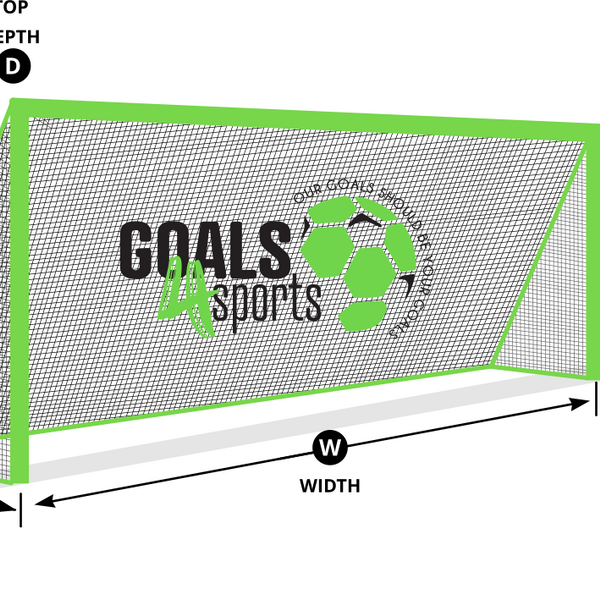
Soccer goals are available in many sizes. Smaller goals work well for early player development and small-sided games. Larger goals support older youth, high school, college, club and adult competition. Use the soccer goal size chart above to compare common goal dimensions, top depth, bottom depth, age groups and typical game formats.
Goals4Sports® offers soccer goals for schools, clubs, recreation departments, parks, training facilities and backyard practice areas.
Soccer Goal Size Chart
| Soccer Goal Size | Top Depth | Bottom Depth | Common Age Group | Typical Game Format | Recommended Use | Shop This Size |
|---|---|---|---|---|---|---|
| 4' H × 6' W | 2' | 4' | Ages 3–6 | 3v3 and introductory play | Backyard practice, early development and small-sided training | Shop 4' × 6' |
| 4' H × 9' W | 2' | 4' | Ages 5–8 | 4v4 | Youth practices, recreation programs and small-sided games | Shop 4' × 9' |
| 6.5' H × 12' W | 3' | 6.5' | Ages 7–10 | 4v4 and 6v6 | Youth matches, recreation programs and player development | Shop 6.5' × 12' |
| 6.5' H × 18.5' W | 3' | 6.5' | Ages 9–12 | 7v7 and 9v9 | Youth league games, clubs, schools and competitive training | Shop 6.5' × 18.5' |
| 7' H × 21' W | 3' | 7' | Ages 11–13 | 9v9 | Older youth matches and the transition to full-size soccer | Shop 7' × 21' |
| 8' H × 24' W | 3' | 8' | Ages 13 and older | 11v11 | High school, college, club, professional and adult soccer | Shop 8' × 24' |
Important: Top and bottom depth measurements may vary by goal style, manufacturer and net configuration. Review the individual product specifications before ordering a replacement net.
What Size Soccer Goal Do I Need?
The right soccer goal depends on several factors:
- Player age
- Game format
- Available field space
- Competition or training use
- Portable or permanent setup
- Goal frame style
- Required net depth
For example, a 4-foot-high by 6-foot-wide goal works well for young players and introductory training. A regulation 8-foot-high by 24-foot-wide soccer goal is commonly used for full-sided 11v11 play.
Always confirm the rules used by your league, school, club or governing organization before purchasing goals for sanctioned competition.
Common Soccer Goal Sizes
4' H × 6' W Soccer Goals
A 4' × 6' soccer goal is a practical option for young players, backyard practice and introductory training. Its smaller opening encourages accuracy while helping new players develop confidence.
This size is commonly used for:
- Ages 3–6
- 3v3 play
- Skills training
- Small-sided activities
- Backyard soccer
The chart lists a typical top depth of 2 feet and bottom depth of 4 feet. However, exact measurements can vary by goal model.
4' H × 9' W Soccer Goals
The 4' × 9' soccer goal provides additional shooting space while remaining manageable for younger players. It is often selected for recreation programs, youth practices and small-sided games.
This size is commonly used for:
- Ages 5–8
- 4v4 games
- Youth recreation programs
- Small training fields
- Finishing and goalkeeper drills
A typical 4' × 9' goal has a 2-foot top depth and a 4-foot bottom depth.
6.5' H × 18.5' W Soccer Goals
The 6.5' × 18.5' soccer goal is a popular option for youth clubs, schools and competitive development programs. It supports a natural transition from small-sided soccer toward the full-size game.
Common applications include:
- Ages 9–12
- 7v7 and 9v9 play
- Youth league competition
- Club training
- School and recreation fields
A typical frame has a 3-foot top depth and 6.5-foot bottom depth.
7' H × 21' W Soccer Goals
A 7' × 21' soccer goal gives older youth players a larger goal while preparing them for regulation-size competition. This size is often chosen for 9v9 soccer and transitional youth programs.
It is commonly used for:
- Ages 11–13
- 9v9 matches
- Older youth leagues
- Club development
- Training before full-size play
The typical measurements shown in the chart include a 3-foot top depth and 7-foot bottom depth.
8' H × 24' W Regulation Soccer Goals
An 8' × 24' soccer goal is the standard full-size option for 11v11 soccer. It is commonly purchased for high schools, colleges, competitive clubs, adult leagues and professional facilities.
Common uses include:
- Ages 13 and older
- 11v11 matches
- High school soccer
- College soccer
- Club and adult competition
- Stadium and professional fields
The chart lists a typical top depth of 3 feet and bottom depth of 8 feet. Some goal styles use different net configurations, so buyers should review the individual product specifications.
Understanding Soccer Goal Depth
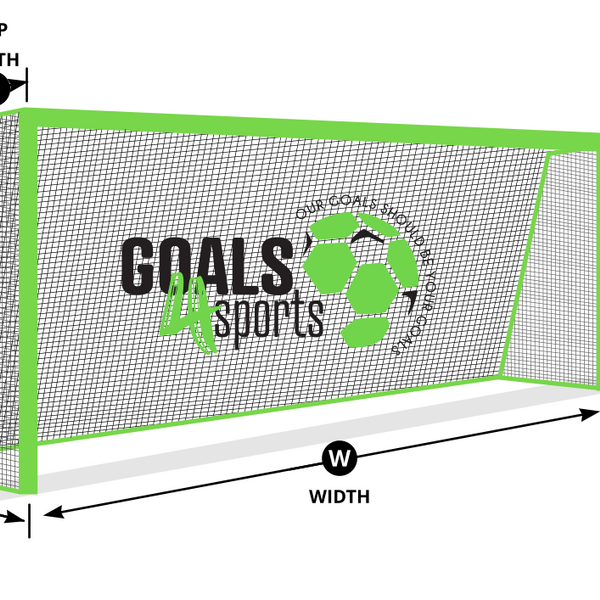
Goal height and width describe the front opening. Top and bottom depth describe how far the net extends behind the goal line.
Top depth measures the distance from the crossbar toward the back of the net.
Bottom depth measures the distance from the front goalposts to the rear ground bar or back of the net at field level.
These dimensions affect the required net size. Two goals with the same height and width may require different nets because their top or bottom depths are different.

Before ordering a replacement soccer goal net, confirm:
- Goal height
- Goal width
- Top depth
- Bottom depth
- Net shape
- Attachment method
- Frame style
Do not select a net based only on the front goal dimensions.
Portable vs. Permanent Soccer Goals
Portable soccer goals are useful for shared fields, seasonal programs and facilities that need to move equipment. Depending on the model, a portable goal may be moved with a compatible wheel kit or transportation system.
Permanent or semi-permanent goals are designed for fields where the equipment remains in a fixed location. These goals may be selected for stadiums, schools and dedicated soccer facilities.
Regardless of the style, every movable soccer goal should be properly secured according to the manufacturer’s instructions. Use compatible anchors designed for the field surface and goal model.
Round, Square and Rectangular Soccer Goal Frames
Soccer goal frames are available in several profiles.
Round frames provide a traditional appearance and are widely used by schools, parks and recreation programs.
Square or rectangular frames provide a clean, professional look and are frequently selected for competitive fields and stadium environments.
The frame profile can affect the appearance, net attachment system, accessories and replacement parts. Confirm compatibility before ordering wheels, anchors, clips or nets.
How to Choose a Soccer Goal
Before purchasing, consider where and how the goal will be used.
Match the Goal to the Players
Choose a size that fits the players’ age and game format. An oversized goal can make the game more difficult for younger goalkeepers and may not match local competition rules.
Measure the Available Space
Confirm that the field provides enough room for the goal frame, net depth, anchoring system and safe movement around the equipment.
Review the Frame Construction
Compare the frame material, profile, finish, ground bar and connection system. These features can affect setup, transportation and long-term maintenance.
Check the Net Attachment Method
Soccer nets may attach with clips, channels, hook-and-loop straps, ties or bungee-style fasteners. Select a system that matches the goal and facility’s needs.
Plan for Anchoring
Portable goals must be properly anchored whenever they are in use. The correct anchor depends on the goal weight, frame design and playing surface.
Consider Transportation
Facilities that move goals regularly may benefit from compatible wheel kits. Confirm that the wheel system is designed for the exact goal model and frame profile.
Soccer Goals for Schools, Clubs and Parks
Schools and sports organizations often need more than one goal. Before placing a multi-goal order, review:
- Required sizes
- Number of fields
- Age divisions
- Field surfaces
- Storage space
- Wheel requirements
- Anchoring requirements
- Net specifications
- Delivery access
- Assembly needs
Large soccer goals may ship by freight carrier. Schools and facilities should verify whether a loading dock, forklift or liftgate service will be needed.
Goals4Sports® works with athletic directors, coaches, clubs, schools, colleges, universities and parks departments to help identify suitable soccer goals and accessories.
Soccer Goal Size FAQs
What is the regulation size of a soccer goal?
A full-size soccer goal is generally 8 feet high by 24 feet wide. This size is commonly used for 11v11 high school, college, club and adult soccer. Always verify the rules for your specific competition.
What size soccer goal is used for youth soccer?
Youth soccer goal sizes vary by age group and game format. Common options include 4' × 6', 4' × 9', 6.5' × 18.5' and 7' × 21'. League requirements may differ.
What size goal is used for 9v9 soccer?
Goals measuring 6.5' × 18.5' or 7' × 21' are often associated with 9v9 play. Confirm the required dimensions with the governing league before ordering.
What size soccer goal is used for 11v11?
An 8' × 24' goal is commonly used for full-sided 11v11 soccer.
Are all 8' × 24' soccer goal nets the same size?
No. Nets can have different top depths, bottom depths, shapes and attachment systems. Measure the complete goal frame before choosing a replacement net.
Do portable soccer goals need anchors?
Yes. Movable soccer goals should be secured with a compatible anchoring system according to the manufacturer’s instructions whenever they are used.
Can soccer goal wheels fit any goal?
No. Wheel kits are usually designed for specific frame sizes, profiles and goal models. Verify compatibility before purchasing.
Find the Right Soccer Goal at Goals4Sports®
Use the soccer goal size chart to narrow your choices by size, age group and game format. Then review each product page for exact dimensions, frame construction, net attachment details, included components and available accessories.
Goals4Sports® carries soccer goals for youth development, recreation programs, schools, competitive clubs, colleges and full-size fields. The right goal supports proper player development while helping your organization create a well-equipped playing environment.
```