Selecting the right bleachers is a facility decision: not simply a seating purchase. The right system should accommodate spectators safely, withstand outdoor conditions, support school branding, and fit the way your fields are used today and in the future.
For school administrators, athletic directors, facility managers, and league organizers, this guide explains the primary decisions involved in purchasing stadium bleachers, including construction material, portability, capacity, safety, accessibility, maintenance, and integration with a complete sideline upgrade.
Start With the Facility’s Actual Needs
Before comparing products, define how and where the bleachers will be used. A youth soccer field may need compact, movable seating that can be relocated between matches. A high school football stadium may require larger, permanently anchored structures with dedicated aisles, guardrails, accessible seating, and engineered foundations.
Consider these questions:
- What is the expected attendance for regular games, tournaments, graduations, and community events?
- Will the bleachers serve one field or multiple playing areas?
- Is the seating area located on concrete, asphalt, compacted gravel, or another surface?
- Will maintenance crews need to move or store the units?
- Is future expansion likely?
- What accessibility and local building-code requirements apply?
Answering these questions first helps your team avoid buying more capacity than the site can support: or selecting portable seating when a permanent installation is more appropriate.
Aluminum vs. Steel Bleachers
Aluminum Bleachers: Lightweight and Weather-Resistant
Aluminum bleachers are a practical choice for many schools, parks, youth leagues, and multi-use athletic facilities. High-grade aluminum construction is lightweight, naturally corrosion-resistant, and easier to transport than traditional steel.
A mill finish or anodized aluminum surface provides a clean, professional appearance with limited maintenance. Powder-coated components can also add color, visual consistency, and additional finish protection.
The primary advantages include:
- Easier movement and installation
- Strong resistance to rust and outdoor corrosion
- Lower routine maintenance requirements
- Clean, modern appearance
- Good flexibility for changing field layouts
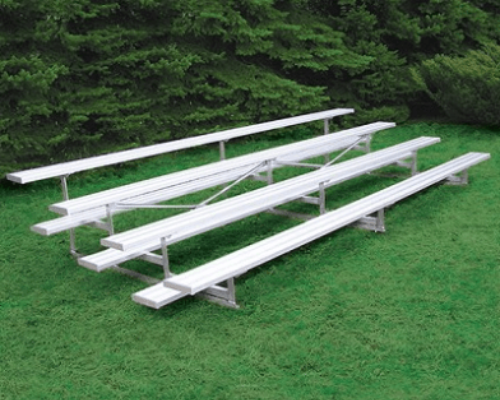
For facilities that need portable aluminum bleachers, tip-and-roll models can simplify seasonal repositioning, event setup, and storage. Goals4Sports offers multiple configurations through its portable aluminum bleachers collection, including three-row, four-row, back-to-back, and tip-and-roll options.
Steel Understructures: Rigidity for Larger Installations
Steel can be an effective option for larger, permanent stadium bleachers that require substantial structural rigidity and anchoring. Galvanized steel understructures are designed to resist corrosion through a protective zinc coating, although all steel systems still require regular inspection for coating wear, rust, loose fasteners, and damaged welds.
Some bleachers combine aluminum seating planks with a galvanized steel understructure. This approach can provide a durable spectator surface while supporting the stability needed for a larger or more permanent installation.
When comparing materials, evaluate the complete system: not just the visible seating planks. Ask about the frame, fasteners, finish, corrosion protection, warranty, structural documentation, and recommended maintenance schedule.
Portable or Permanent: Which Configuration Fits?
Portable Bleachers
Portable seating is useful when a facility supports multiple sports, fields, or seasonal events. Lightweight systems can be moved to different sidelines, positioned for tournaments, or stored during the off-season.
Portable aluminum bleachers are especially useful for:
- Soccer tournaments and youth leagues
- Lacrosse and field hockey fields
- Baseball and softball overflow seating
- Football practice fields
- Community parks and multipurpose facilities
- Temporary event seating
Tip-and-roll designs can reduce setup labor, but mobility does not eliminate the need for safe placement. Portable units should be positioned on a stable, level surface and secured according to the manufacturer’s requirements and local conditions.
Permanent or Stationary Bleachers
Permanent stadium bleachers are appropriate when seating will remain in one location and the facility has a dedicated spectator area. These systems may require concrete foundations, engineered anchoring, stairs, guardrails, aisles, ramps, and site-specific structural documentation.
A permanent installation should account for:
- Wind and snow loads
- Soil and foundation conditions
- Crowd movement
- Drainage and water runoff
- Access for inspection and maintenance
- Future expansion or renovations
For larger projects, coordinate with your architect, engineer, building official, and accessibility coordinator before ordering equipment.
Plan Capacity and Row Configuration Carefully
Nominal seating capacity is only one part of the planning process. Start by measuring the available width and depth of the site. Then compare the required number of rows with spectator circulation, aisles, walkways, guardrails, stairs, and accessible seating spaces.
A common planning estimate uses approximately 18 inches of linear seating space per spectator. For example, a 15-foot bleacher provides roughly 10 spectator spaces per row before accounting for layout details. Actual capacity depends on the product design, seat dimensions, aisles, and required wheelchair and companion positions.
Goals4Sports’ bleacher collection includes options such as:
- Compact 7.5-foot units for smaller fields and youth programs
- 15-foot units for typical school sidelines
- 21-foot units for larger events
- Four-row configurations for increased capacity
- Back-to-back systems where seating is needed on both sides
Do not plan only for average attendance. Review peak events such as playoffs, tournaments, rivalry games, graduation ceremonies, and community programs. A modular system may allow your facility to add capacity without redesigning the entire site.
Safety Features to Review Before Purchase
Safety requirements vary by location and installation type, so confirm the applicable building codes before finalizing a design. Your review should include the following elements.
Guardrails and Handrails
Elevated seating may require guardrails, handrails, and controlled access points. Guardrail height, opening dimensions, loading requirements, and stair handrail specifications should be verified against current local codes.
Inspect the proposed design for:
- Secure guardrails at elevated edges
- Safe handrails along stairs and aisles
- Guard openings that reduce fall and entrapment risks
- Slip-resistant steps and walking surfaces
- Clearly defined access and exit routes
Anchoring and Stability
Anchoring protects spectators by limiting movement, overturning, and wind-related instability. Portable systems may use manufacturer-specified anchor kits, while permanent stadium bleachers may require engineered connections to a concrete foundation.
Never assume that a heavy unit is automatically stable. Confirm the anchoring method, surface requirements, wind exposure, and installation instructions for the specific model.
ADA Seating and Accessible Routes
Accessible seating should be planned as part of the original layout: not added after installation. Include wheelchair spaces, companion seats, accessible routes, appropriate sightlines, ramps or lifts where required, and unobstructed access from parking and walkways.
For elevated bleachers, stairs alone do not provide an accessible route. Work with your accessibility coordinator to verify ramp slopes, landings, handrails, surface conditions, and viewing quality before construction begins.
Weather Resistance and Maintenance
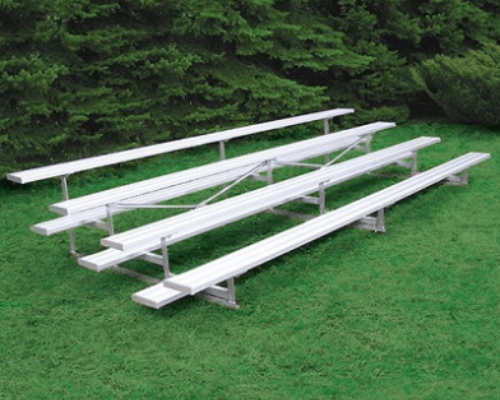
Outdoor seating must withstand rain, snow, sunlight, temperature changes, dirt, and repeated public use. Aluminum is often selected for stadium bleachers because it resists corrosion and does not require routine repainting.
A practical maintenance program should include:
- Checking bolts, fasteners, and connections
- Inspecting guardrails, handrails, stairs, and seat planks
- Removing leaves, dirt, and debris
- Checking for bent, cracked, or deformed components
- Inspecting anchors and foundation connections
- Confirming that ramps and accessible seating remain unobstructed
- Recording repairs and professional inspections
Use only cleaning products recommended by the manufacturer. Avoid harsh chemicals that can damage anodized, powder-coated, or galvanized finishes. A documented inspection schedule also helps facility managers demonstrate responsible stewardship to school leadership, insurers, and local authorities.
Build a Complete Sideline and Facility Upgrade
Bleachers have the greatest impact when they are planned as part of a complete spectator and team environment. A coordinated upgrade can improve safety, organization, branding, and the professional appearance of the entire venue.
For teams and coaches, add weather protection with team shelters and provide organized player seating with aluminum team benches.
For spectators and event staff, consider portable press boxes, filming towers, field marking equipment, and protective accessories. For soccer facilities, pair new stadium bleachers with soccer goals and field equipment.
The same planning approach applies across sports:
- Soccer: Sideline seating, team shelters, full-size goals, corner flags, and field marking systems
- Lacrosse: Durable spectator seating, team benches, protective padding, and sideline organization
- Field hockey: Weather-resistant seating, team shelters, benches, and field accessories
- Football: Larger stadium bleachers, press boxes, team shelters, and branded sideline equipment
- Baseball and softball: Compact seating near backstops and baselines, benches, and protective netting
- Pickleball: Flexible spectator seating for courts, tournaments, and community events
Custom color finishes, team graphics, and branded equipment can build school pride while creating a stronger sideline presence. Consistent colors across bleachers, shelters, benches, press boxes, and goals give the venue a more professional appearance for students, families, athletes, and visiting programs.
A Practical Stadium Bleacher Buying Checklist
Before approving a purchase, confirm that your team has reviewed:
- Expected attendance and future capacity needs
- Available site width, depth, surface, and drainage
- Aluminum, steel, or hybrid construction
- Portable, semi-permanent, or stationary installation
- Row count, seat spacing, aisles, and walkways
- Guardrails, handrails, stairs, and slip-resistant surfaces
- Anchoring and foundation requirements
- ADA seating, companion positions, and accessible routes
- Weather-resistant finishes and maintenance requirements
- Local building-code compliance and structural documentation
- Branding, color, and customization options
- Delivery, assembly, storage, and long-term service support
Plan Your Purchase With Goals4Sports
The right stadium bleachers should support safe spectators, efficient facility operations, and a professional game-day environment. Whether you need portable aluminum bleachers for a multi-use school field or a more permanent seating solution for a stadium upgrade, the Goals4Sports team can help you compare configurations, plan capacity, and align the purchase with your facility and school budget.
Contact Goals4Sports to discuss your site requirements, seating goals, customization options, and complete sports equipment needs.

Thank You for Choosing Goals4Sports.