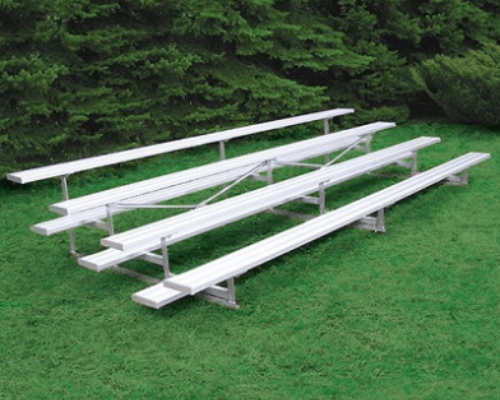
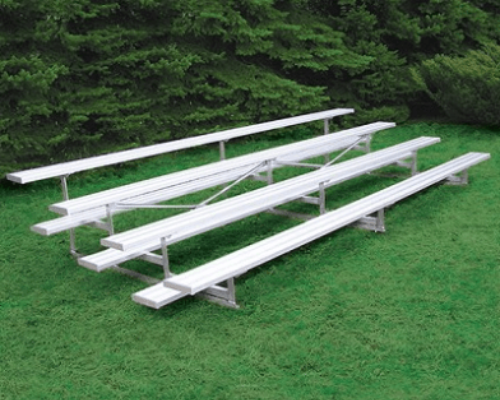
You protect your players. You protect your fans. You invest in goals, bleachers, team shelters, field safety equipment, and professional signage.
Who protects the officials?
At schools, colleges, youth leagues, and tournament complexes, referees and scorekeepers can spend hours standing or working along an exposed sideline. They face direct sun, wind, light rain, glare, and crowded game-day conditions: often without a dedicated place to sit, organize paperwork, or reset between matches.
That makes a referee shelter more than a convenience. It is practical sideline infrastructure that helps officials stay comfortable, focused, and ready to manage the game.
For facilities competing for experienced officiating crews, this overlooked upgrade can create a meaningful advantage.
Why Referee Shelters Matter More Than Ever
Referee shortages have made reliable officiating crews more difficult to recruit and retain. Working conditions are only one part of that challenge, but they are an important part of the overall experience.
Officials notice how a venue treats them.
A covered, purpose-built workspace communicates that referees, scorekeepers, and sideline staff are essential participants in a well-run event: not an afterthought positioned wherever space is available.
A dedicated shelter can help your facility:
- Enhance comfort during long games and tournaments
- Reduce weather-related complaints from officials and scorekeepers
- Limit avoidable delays caused by relocating equipment or personnel
- Support referee retention by improving the working environment
- Elevate the appearance of school, college, and tournament venues
- Create visible branding space for schools, leagues, sponsors, or host organizations
When assigning crews, tournament directors and officiating coordinators want venues where games run smoothly. A professional officials’ area can become part of that reputation.
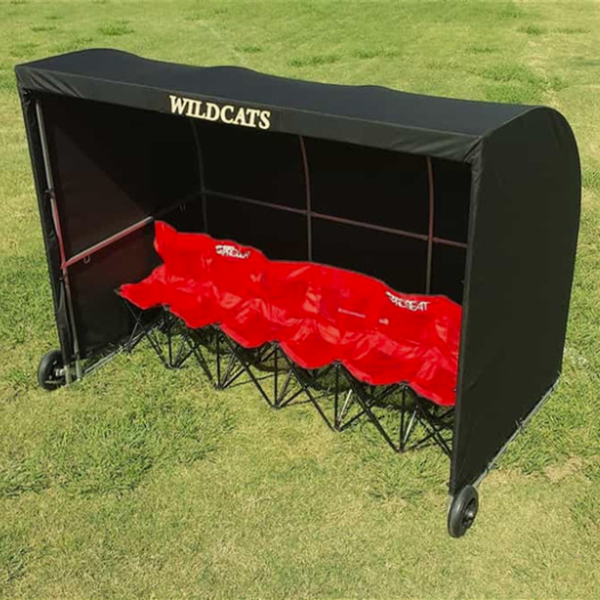
What Makes a Good Referee Shelter?
A referee shelter must balance protection with visibility. Officials need coverage from the elements, but they also need clear sightlines to the field and quick access to the playing area.
Enclosed Protection Without Blocking Sightlines
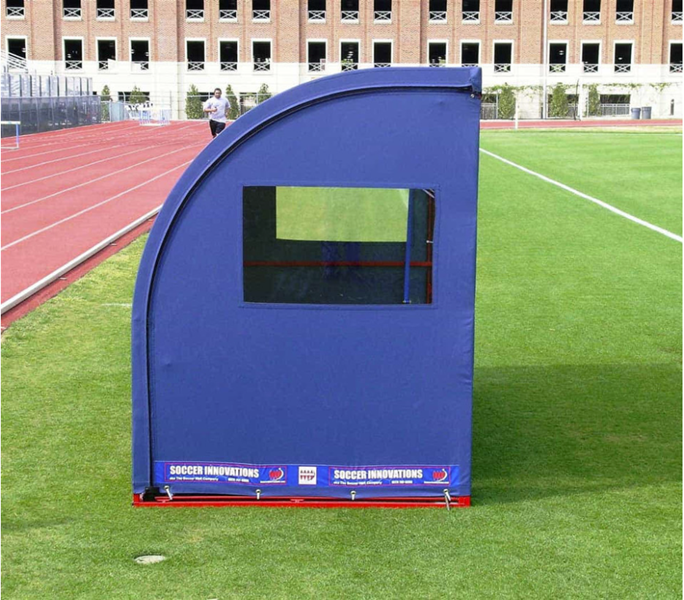
An effective shelter uses an enclosed design to help shield occupants from sun, wind, and light rain. Clear windows preserve visibility while adding a practical layer of protection.
The front should remain open so officials can maintain direct sightlines, communicate with event staff, and move in and out without navigating a closed structure.
For facilities evaluating permanent or semi-permanent options, ask about impact-resistant materials, transparent polycarbonate panels, weather-resistant roofing, and anchoring requirements. For portable applications, prioritize a stable frame, durable cover materials, and straightforward setup procedures.
Portability for Multi-Field Operations
Tournament facilities often need to move equipment between fields. A referee shelter that can be assembled quickly and repositioned without heavy equipment gives grounds crews and event staff more flexibility.
Portability is especially valuable for:
- Multi-field soccer complexes
- College lacrosse and field hockey facilities
- Football venues with changing sideline layouts
- Baseball and softball complexes
- Youth tournament sites
- Pickleball events using temporary competition layouts
A portable shelter can serve different sports throughout the year instead of remaining tied to one field.
Customization That Builds a Professional Image
Your sideline infrastructure should reinforce your organization’s identity. Cover colors, school logos, league marks, and sponsor graphics can transform a functional shelter into a polished part of the venue.
For schools and non-profits, customization also creates a visible asset that can support fundraising or sponsorship programs. A branded referee shelter provides recurring exposure without requiring additional sideline signage.
Featured Product: Referee Sports Shelter 8.5' – Portable Sideline Cover
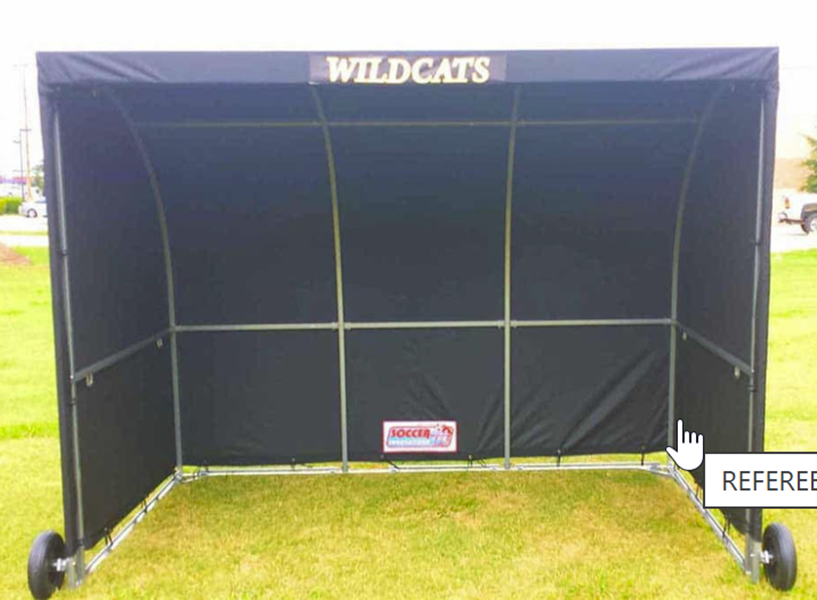
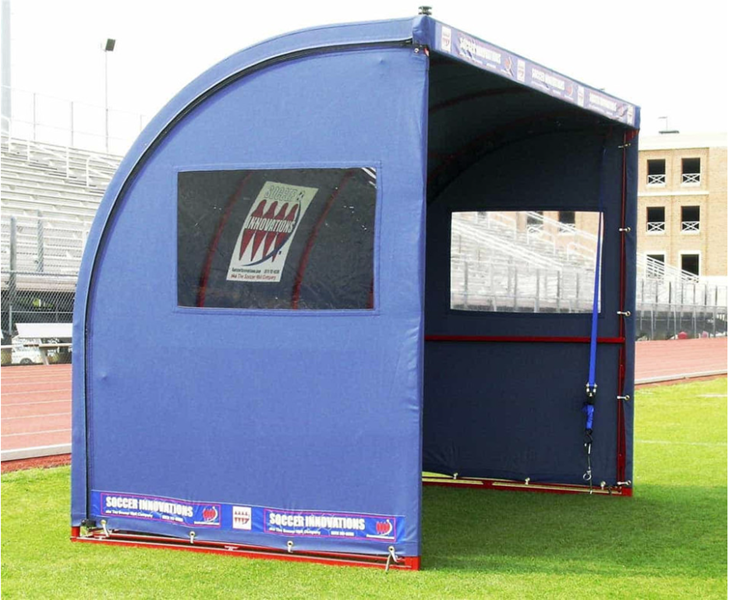
The Referee Sports Shelter 8.5' – Portable Sideline Cover is designed for referees, scorekeepers, and sideline officials who need a protected, organized workspace.
The shelter features:
- An 8.5-foot width for officials, paperwork, radios, tablets, and game equipment
- An enclosed design with clear windows
- An open front for field access and unobstructed sightlines
- Protection from shade, wind, and light rain
- Durable, lightweight construction
- Quick assembly for flexible event use
- Multiple cover color options
- Customization potential for school, club, league, or sponsor branding
The regular price is $3,177, with a current sale price from $2,950, representing a $227 savings.
Benches are not included, allowing each program to select seating based on its operational needs. The shelter is available through the Team Shelters collection, where facilities can review additional sideline protection options.
Where Should You Place a Referee Shelter?
Placement affects safety, communication, and daily usability. Before installation or setup, review the field layout with athletic staff, officials, coaches, and facility operations personnel.
Preserve Clear Sightlines
Position the shelter where officials can see the entire field without obstruction from team benches, equipment carts, signage, or spectators.
The shelter should remain close enough to the action for efficient communication but far enough away from the field of play to avoid interfering with player movement or officials’ mechanics.
Integrate With the Scoring Area
If the shelter will support scorekeepers or timekeepers, place it near the scoring table, communication equipment, and power access when available. Plan for clipboards, laptops, tablets, radios, charging equipment, and league paperwork.
A dedicated workspace reduces the temptation to place administrative equipment on player benches or makeshift tables.
Maintain Safe and Accessible Routes
Keep pedestrian routes clear around the shelter. Do not place it in front of gates, emergency access points, ramps, or designated accessible pathways.
The final location should account for:
- Field boundaries and safety zones
- Spectator circulation
- Team bench separation
- Equipment transport routes
- Ground conditions and drainage
- Anchoring or ballast requirements
- ADA access and accessible approach routes
A portable shelter should be secured according to the manufacturer’s instructions and removed or stored when severe weather conditions require a sturdier enclosed building or vehicle. A sideline cover provides shade and protection from light weather; it should not be treated as the primary shelter during lightning or extreme storms.
Build a Complete Officials and Operations Zone
A referee shelter performs best as part of a coordinated sideline plan.
Add Durable Seating
Because the referee shelter does not include benches, pair it with Aluminum Player Benches sized for your officials, scorekeepers, or event staff.
Aluminum seating offers a professional appearance, low-maintenance performance, and durable use across soccer, football, lacrosse, field hockey, and baseball facilities.
Upgrade Spectator Areas
For venues hosting tournaments or high-attendance games, Portable Aluminum Bleachers help separate spectator traffic from operational areas.
A clear distinction between the officials’ workspace, team benches, and spectator seating improves sideline organization and supports a more professional venue presentation.
Support Announcers and Video Crews
A referee shelter protects game officials. A Portable Press Box or Filming Tower supports announcers, coaches, statisticians, media staff, and video operations.
Together, these structures help create a complete game-management zone for competition, broadcasting, and event administration.
This complete approach turns scattered sports equipment for schools into a coordinated, operationally efficient venue.
Budgeting and Planning for a Referee Shelter
Include more than the product price in your capital request. A complete budget should account for:
- Shelter and customization options
- Seating, tables, and storage
- Anchoring or ballast requirements
- Ground preparation, if applicable
- Freight and delivery access
- Assembly and setup labor
- Storage between seasons
- Branding or sponsor graphics
The 8.5-foot referee shelter ships by trucking company because of its size and weight. Request a freight quote and estimated ship date before placing an order, particularly when coordinating delivery with a tournament schedule or facility renovation.
Schools, leagues, and non-profit organizations should also ask about available pricing options. A well-planned purchase can combine a referee shelter with benches, bleachers, and a press box to address several facility needs at once.
Protect the People Who Make the Game Happen
The most overlooked sideline upgrade may be the one that improves every game without drawing attention to itself.
A referee shelter helps officials work with greater comfort and focus. It supports scorekeepers and sideline staff. It reduces weather-related disruptions. It strengthens your facility’s professional image and shows assigning organizations that your venue takes game operations seriously.
For schools, colleges, youth programs, tournament directors, and multi-sport complexes, the Referee Sports Shelter 8.5' – Portable Sideline Cover is a practical way to elevate the sideline.
Contact Goals4Sports to discuss shelter placement, seating, customization, freight planning, and a complete officials and operations zone for your facility.

Thank You for Choosing Goals4Sports.