Recruiting doesn't start in the coach's office. It starts in the parking lot.
Before a recruit meets a coach, watches training, or hears about the program’s culture, they are already forming an opinion. They notice whether the route to the field is clear. They notice whether equipment looks maintained. They notice whether the facility feels intentional or improvised.
The family may not describe these observations in technical terms. They may not mention faded paint, missing net clips, or an unmarked access route. They simply leave with an impression: this program is organized and invested, or it is not.
For athletic directors, facility managers, coaches, and program administrators, that first impression is a facilities issue. Walk the route from the visitor parking area to the field as if you have never seen the property before. Every piece of sports equipment is communicating.
The First Ten Minutes Are a Facility Walkthrough
Stop One: The Approach and Perimeter
The first message comes from the approach.
A recruit and their family see fencing, barrier netting, gates, signs, landscaping, and the condition of the walking surface. They are looking for a clear answer to a basic question: does this program know how to manage its environment?
A clean perimeter with readable signage and properly tensioned barrier netting communicates control and safety. Bent fencing, improvised signs, loose netting, or equipment stored along the route communicates drift.
This does not require a complete site renovation. Remove clutter. Replace damaged signs. Confirm that visitors can identify the correct entrance without asking for directions. Make sure the route from the parking lot to the field is clear and accessible.
Stop Two: The Field Surface
The field is usually the first large visual your visitors evaluate.
Crisp, accurately measured lines create an immediate sense of readiness. Faded, ghosted, uneven, or partially repainted lines suggest that the facility is being managed at the last possible moment.
A professional line does more than improve appearance. It supports game operations, reinforces field dimensions, and helps the surface look prepared for serious competition. Measuring accuracy matters, especially when fields support multiple sports.
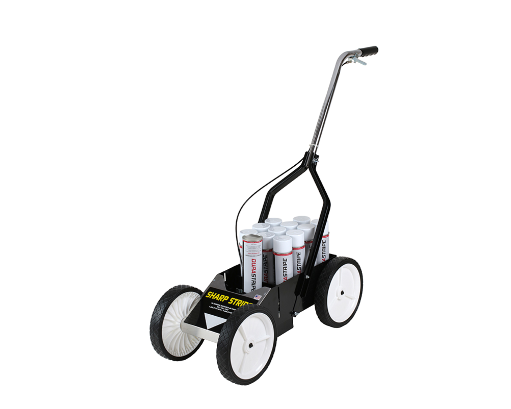
A reliable paint machine and consistent field marking paint are among the most cost-effective upgrades available. The same maintenance process can support soccer, lacrosse, field hockey, football, baseball layouts, and pickleball court markings when the facility uses multiple playing areas.
Shop Field Marking Paint and Athletic Line Striping Machines
Stop Three: The Goals
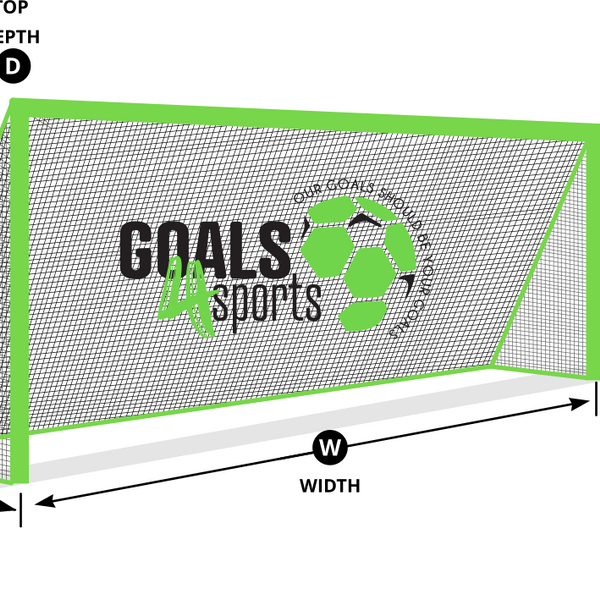
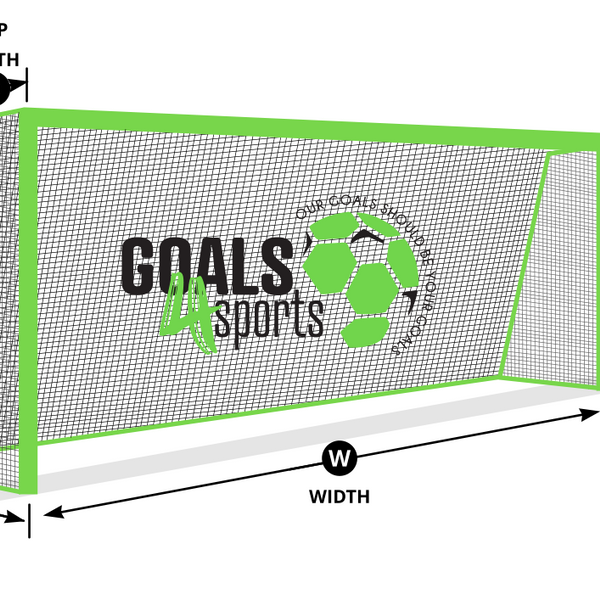
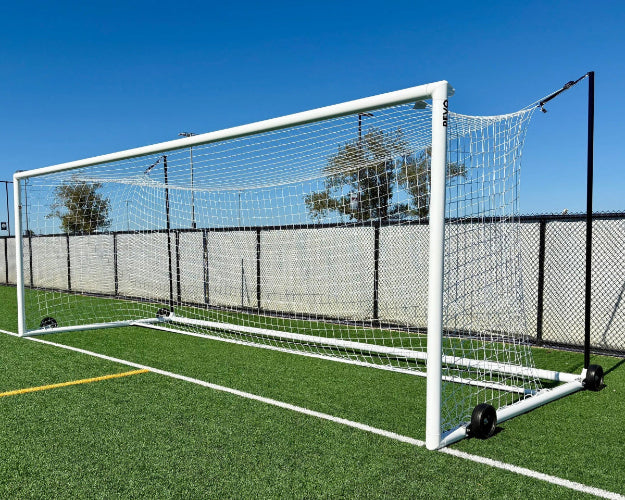
The goals are the most visible equipment on a soccer field. They are also one of the fastest ways to signal whether a program maintains its assets.
A recruit notices sagging or torn nets, faded frames, missing net clips, bent components, and goals that are parked out of position. They also notice whether the equipment looks ready for competition or simply left where it was last used.
Goal condition affects more than presentation. Unanchored goals are a safety concern. Goals should be inspected, positioned correctly, secured according to the field setup, and stored appropriately when not in use.
For a high school or college stadium, professional 8x24 stadium soccer goals can establish a stronger match-day presence through a powder-coated finish, heavy-duty aluminum construction, and a box-style net profile. For training fields and multi-use complexes, PEVO soccer goals by style provide options for different applications, including portable soccer goals.
Stop Four: The Sideline
The sideline is where the program’s organization becomes visible.
A family sees whether players have a defined place to sit, whether bags and equipment are kept off the ground, and whether the team area provides protection from sun, wind, or rain. They see whether the shelters match, whether covers are faded, and whether the bench area looks designed for athletes or assembled from whatever was available.
A branded, organized sideline creates a stronger professional image. A custom MVP Stadium team shelter can combine weather protection with school colors, logos, sponsor graphics, and a more consistent visual identity. Its UV-treated 600D polyester cover is designed to resist fading, while anchoring and wheel-kit options support practical field use.
For a smaller or more flexible setup, PEVO Covered Team Benches are available in 7.5-foot, 15-foot, and 21-foot options. Basic aluminum player benches can also organize a sideline without creating a major installation project.

The message is simple: athletes are expected, protected, and prepared here.
Stop Five: The Details
Small equipment carries disproportionate visual weight because it is close to the visitor.
Look at the corner flags. Are they upright, clean, and consistent? Are field ID markers easy to read? Are post protector pads installed where needed? Do school and sponsor graphics appear intentional, or are they faded and mismatched?
These details are inexpensive compared with a new stadium project, but they help a facility feel complete. Customized corner flags measure 13 inches by 13 inches, use dye sublimation for vibrant graphics, slide over existing 1-inch poles, and require a minimum order of four.

For exposed posts and goal structures, heavy-duty protector pads reinforce the impression that safety has been considered beyond the playing surface.

Stop Six: The Spectator Side
The family is not only evaluating where the recruit will play. They are evaluating where they will sit.
Inspect the bleachers from the visitor’s perspective. Are planks worn? Are guardrails present and secure? Is the seating area clean? Is there a clear route for spectators with mobility needs? Does the facility appear to have considered parents, grandparents, and visiting supporters?
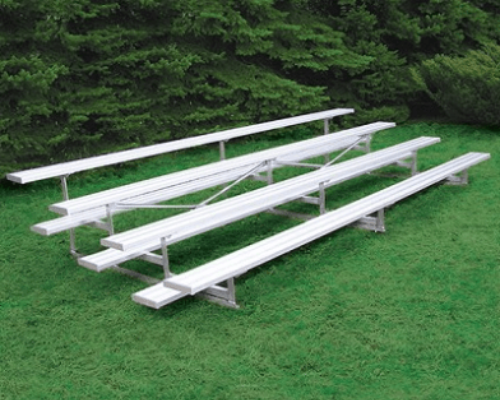
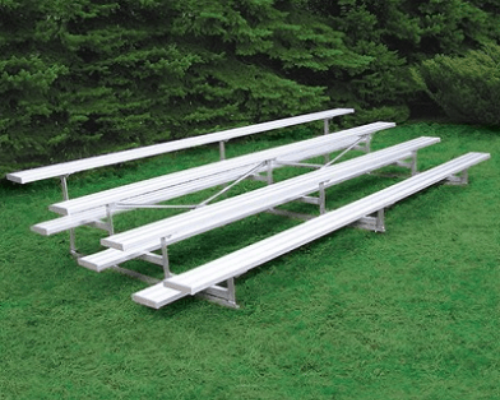
Portable seating can help programs improve the spectator experience without committing immediately to a permanent structure. Portable aluminum bleachers offer weather-resistant seating with flexible configurations. A 4-row all-aluminum bleacher provides a clean, durable appearance, while PEVO 3-row Tip-N-Roll bleachers support facilities that need mobility between events.
Capacity, guardrails, accessible seating, and route planning should be reviewed together. Appearance matters, but access and safety come first.

Stop Seven: The Operator’s Perch
Finally, look toward the place where the game is recorded, announced, and reviewed.
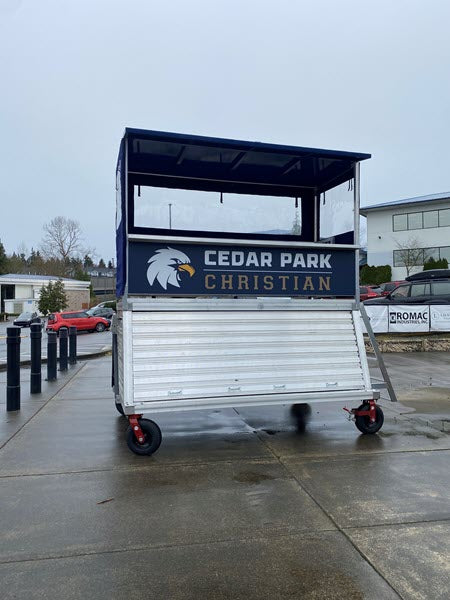
A press box or filming tower tells recruits and families that the program treats competition, analysis, broadcasting, and communication as part of the athletic experience. A makeshift camera position tells a different story.
A portable press box and filming tower provides an elevated platform for filming, coaching analysis, media, and event operations. The equipment can serve soccer, football, baseball, lacrosse, field hockey, and other field-based programs. Custom options can also support school colors, banners, enclosures, and event-specific requirements.
It is not necessary to install a press box before improving the basics. But its presence signals that the program is thinking beyond today’s game.
Walk Your Facility Like a Stranger
Set aside ten minutes before the next recruiting visit.
Park in the visitor lot. Do not begin at the athletic office. Walk the route a first-time family would take. Use your phone to photograph what you see, but do not correct anything during the walk.
Score each area from one to five:
- Can a visitor find the facility without assistance?
- Does the perimeter look maintained and secure?
- Are field lines crisp, accurate, and complete?
- Are soccer goals positioned, netted, clipped, and anchored correctly?
- Are team areas organized and protected from weather?
- Do benches, shelters, and gear storage look intentional?
- Are corner flags, markers, pads, and branding in good condition?
- Can families reach spectator seating through a clear, accessible route?
- Do bleachers look safe, stable, and considered?
- Is there a professional location for filming, scoring, or broadcasting?
- Does the facility look ready today, not someday?
This is not a vanity exercise. It is a perception audit. Recruits and families are deciding whether the environment matches the program’s promises about preparation, investment, and professionalism.
Fix the Most Visible Problems First
A phased plan lets a program improve this season without waiting for a capital campaign.
Tier One: This Week
Start with high-visibility, low-cost corrections:
- Repaint field lines with accurate measurements.
- Replace torn nets and missing net clips.
- Install or repair goal anchors.
- Add protector pads where appropriate.
- Replace damaged corner flags.
- Refresh field ID markers and basic signage.
- Remove clutter from visitor routes and sidelines.
This tier produces the fastest change. It improves branding and safety for a relatively small spend.
Tier Two: This Season
Next, organize the sideline:
- Add aluminum player benches.
- Replace mismatched or damaged seating.
- Add a scorer’s table where event operations require one.
- Replace faded shelter covers.
- Standardize team colors and visible branding.
Tier Three: Next Budget Cycle
Plan for larger but still flexible facility upgrades:
- Covered team benches.
- Full team shelters.
- Portable aluminum bleachers.
- Accessible spectator seating and route improvements.
- Guardrail and capacity planning.
Tier Four: Capital Projects
Reserve major funding for structural upgrades:
- Stadium soccer goals.
- Permanent football goalposts.
- Press boxes.
- Filming towers.
- Larger spectator and event infrastructure.
The strategic point is straightforward: the cheapest tier is often the most visible tier. A program with a tight budget should fix perception first and buy structure later.
Make the Standard Repeatable
A strong first impression should not depend on one recruiting visit.
Use a recurring facility routine:
- Pre-season: inspect goals, nets, anchors, shelters, benches, bleachers, signage, and protective pads.
- Game day: complete a visitor-route walkthrough before gates open.
- After events: remove loose equipment, restore field positions, and clear sideline clutter.
- End of season: inspect covers, hardware, wheels, clips, and storage conditions.
- Documentation: record repairs, replacement needs, measurements, and budget priorities.
Consistency is what reads as “well-run” to a family. It shows that the facility is not being prepared only for recruits. It is being managed for athletes, coaches, spectators, officials, and the entire program.
Build a Better First Five Minutes
Walk your facility before your next visitor does.
Goals4Sports can help athletic directors and facility managers identify practical improvements, prioritize immediate fixes, and develop a phased plan for goals, field marking equipment, team shelters, benches, bleachers, and press box solutions.
Contact Goals4Sports for a Facility Walkthrough

Thank You for Choosing Goals4Sports.